
Last week House Speaker Kevin McCarthy released a proposed debt limit bill that he says would “responsibly raise the debt limit into next year.”
The “Limit, Save, Grow Act of 2023” takes aim at many areas of spending, including the Inflation Reduction Act signed into law by President Biden in 2022. This bill has been hailed as the largest ever investment into combating climate change.
McCarthy’s proposal — which can be read in full here — contains a section called “Repeal Market Distorting Green Tax Credits”, as identified in the following screen capture from the proposed bill:
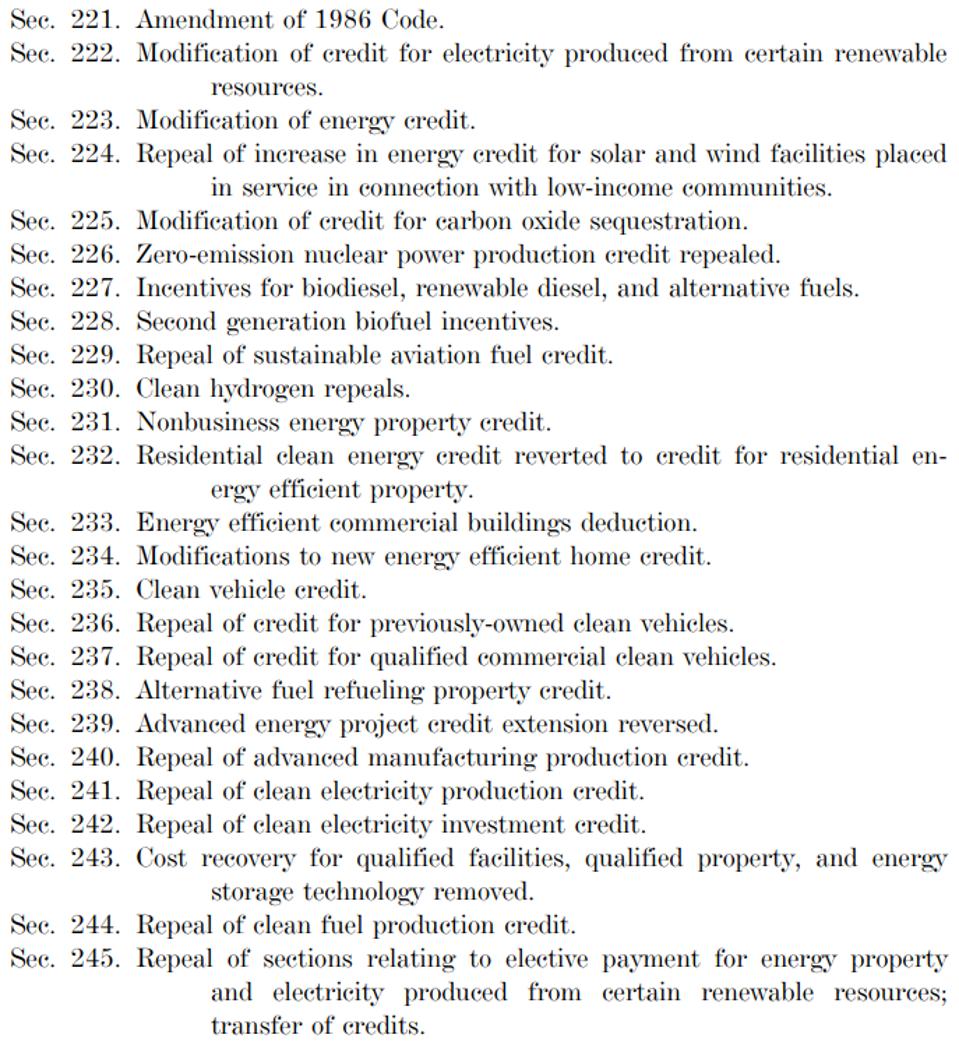
Whether you are for or against McCarthy’s proposal, it highlights a long-standing issue that leads to dysfunction in U.S. energy policies.
We elect our presidents to four-year terms. Congress is up for election every two years. The two major political parties have very different ideas about what constitutes good energy policy. That means that policy priorities at the executive level can change sharply every four years, and those at the legislative level can change every two years.
Why is this such a problem? Because large energy projects take longer than this to complete. They can take a decade or more. If policy priorities change every 2-4 years, it makes it extremely difficult for an energy company to execute a major project.
It’s not a left or right issue. It impacts both sides. The Keystone XL pipeline is a good example. This $8 billion project was sidelined by President Obama, fast-tracked by President Trump, and once again sidelined by President Biden. TC Energy (formerly TransCanada) finally gave up on the project.
Lack of a consistent, long-term framework for energy companies — fossil or renewable — increases project risks and makes it less likely that ambitious projects will be executed.
There are no assurances that McCarthy has the votes to pass this proposal, and it would be dead on arrival in the Senate. Even if it passed the Senate, it would be vetoed by President Biden. So, there’s really no chance that this proposal passes into law. But, any time one party controls the executive and legislative branch, it can overturn years of progress toward a major energy project.
When we wonder why gasoline prices have spiked so high, or why we haven’t moved more quickly in the direction of renewable energy — the blame is largely due to a lack of a consistency over time. If we continue down this path, we will continue to have dysfunction in our energy policies.
Follow Robert Rapier on Twitter, LinkedIn, or Facebook
