
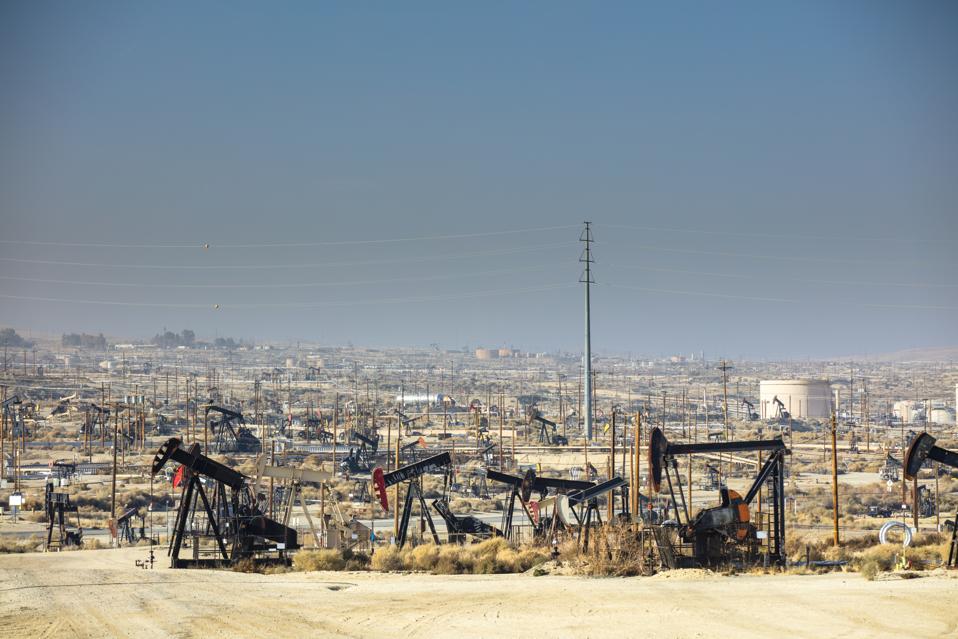
This week I am creating slides for a presentation I am giving in California later this month. While researching the material, I took a closer look at the history of California’s oil industry.
California’s Historical Importance
Many people are unaware about California’s importance in the U.S. oil industry. In fact, 100 years ago California was the top oil producer in the U.S., responsible at one point for nearly 40% of U.S. oil production.
California’s oil production rose throughout most of the 20th century, briefly eclipsing one million barrels per day in the early 1980s. Oil production began to decline there after peaking in 1985.
The same pattern took place in many other states, and in fact was the case for the entire U.S., where oil production peaked in 1970 and then declined over the next 35 years.
The Shale Boom Arrives
But the shale boom changed the trajectory of U.S. oil production. Oil production that had fallen for decades reversed direction and began to surge about a decade ago. Almost every state with shale oil resources saw a similar surge in production.
Since 2010, U.S. oil production has increased by 131%, with huge gains in oil production in the following states (among others):
- North Dakota – up 634%
- Colorado – up 508%
- New Mexico – up 377%
- Texas – up 330%
- Oklahoma – up 238%
In fact, only three major oil-producing states have seen a decline in oil production since 2010: California, Louisiana, and Alaska. One of the graphics I created for my presentation shows the stark contrast between oil production in Texas and California as the shale boom unfolded.

During the 1980s and 1990s, oil production in Texas was declining faster than it was in California. Had that trajectory been maintained, oil production in Texas may have fallen below California’s in about 2010.
